
Mouse Secondary Antibodies

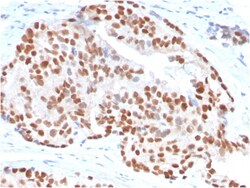
Biotium NKX3.1 (Metastatic Prostate Adenocarcinoma Marker)(NKX3.1/3347), 1mg/mL
NKX3. 1 is a prostate specific gene encoding a transcription factor that plays an important role in normal prostate development and carcinogenesis. It is a prostatic tumor suppressor gene located on chromosome 8p21. 2, which frequently undergoes a loss of heterozygosity. NKX3. 1 expression is highly restricted in prostate epithelial cells and therefore can be used as a diagnostic biomarker for prostate cancer and other metastatic lesions of prostatic origin. Furthermore, NKX3. 1 shows better sensitivity than Prostate Specific Antigen (PSA) for identifying metastatic prostatic adenocarcinoma. This suggests that immunohistochemical staining of NKX3. 1, along with other prostate-restricted markers, may be valuable for the definitive determination of prostatic origin in poorly differentiated metastatic carcinomas. Primary antibodies are available purified, or with a selection of fluorescent CF Dyes and other labels. CF Dyes offer exceptional brightness and photostability. Note

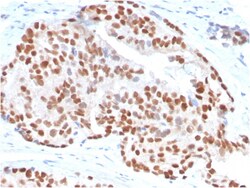
Biotium NKX3.1 (Metastatic Prostate Adenocarcinoma Marker)(NKX3.1/3347), 0.2mg/mL
NKX3. 1 is a prostate specific gene encoding a transcription factor that plays an important role in normal prostate development and carcinogenesis. It is a prostatic tumor suppressor gene located on chromosome 8p21. 2, which frequently undergoes a loss of heterozygosity. NKX3. 1 expression is highly restricted in prostate epithelial cells and therefore can be used as a diagnostic biomarker for prostate cancer and other metastatic lesions of prostatic origin. Furthermore, NKX3. 1 shows better sensitivity than Prostate Specific Antigen (PSA) for identifying metastatic prostatic adenocarcinoma. This suggests that immunohistochemical staining of NKX3. 1, along with other prostate-restricted markers, may be valuable for the definitive determination of prostatic origin in poorly differentiated metastatic carcinomas. Primary antibodies are available purified, or with a selection of fluorescent CF Dyes and other labels. CF Dyes offer exceptional brightness and photostability. Note
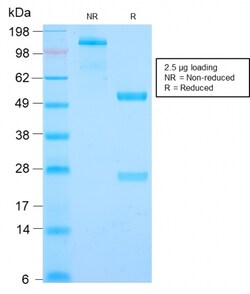
Biotium Cyclin B1 (G2- & M-phase Cyclin)(CCNB1/2978R), CF740 conjugate, 0.1mg/mL
Recognizes a protein of 55-62 kDa, identified as cyclin B1. In mammals, cyclin B associates with inactive p34cdc2, which facilitates phosphorylation of p34cdc2 at aa 14Thr and 15Tyr. This maintains the inactive state until the end of G2-phase. The inactive cyclin B-p34cdc2 complex continues to accumulate in the cytoplasm until the completion of DNA synthesis, when Cdc25, a specific protein phosphatase, dephosphorylates aa 14Thr and 15Tyr of p34cdc2 rendering the complex active at the G2/M boundary. This mitotic kinase complex remains active until the metaphase/anaphase transition when cyclin B is degraded. This degradation process is ubiquitin-dependent and is necessary for the cell to exit mitosis. So, cyclin B-p34cdc2 plays a critical role in G2 to M transition. Primary antibodies are available purified, or with a selection of fluorescent CF Dyes and other labels. CF Dyes offer exceptional brightness and photostability. Note: Conjugates of blue fluorescent dyes like CF4
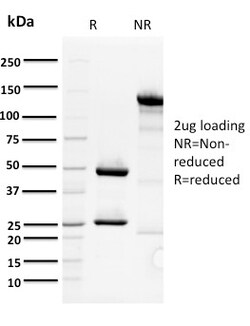
Biotium ORC1(7F6/1), CF568 conjugate, 0.1mg/mL
The initiation of DNA replication is a multi-step process that depends on the formation of pre-replication complexes, which trigger initiation. Among the proteins required for establishing these complexes are the origin recognition complex (ORC) proteins. ORC proteins bind specifically to origins of replication where they serve as scaffold for the assembly of additional initiation factors. Human ORC subunits 1-6 are expressed in the nucleus of proliferating cells and tissues, such as the testis. ORC1 and ORC2 are both expressed at equivalent concentrations throughout the cell cycle; however, only ORC2 remains stably bound to chromatin. ORC4 and ORC6 are also expressed constantly throughout the cell cycle. ORC2, ORC3, ORC4 and ORC5 form a core complex upon which ORC6 and ORC1 assemble. The formation of this core complex suggests that ORC proteins play a crucial role in the G1-S transition in mammalian cells. Primary antibodies are available purified, or with a selection of flu
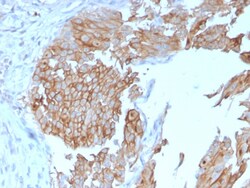
Biotium Uroplakin 1B (Urothelial Differentiation Marker)(UPK1B/3102), Biotin conjugate, 0.1mg/mL
The protein encoded by this gene is a member of the transmembrane 4 superfamily, also known as the tetraspanin family. Most of these members are cell-surface proteins that are characterized by the presence of four hydrophobic domains. The proteins mediate signal transduction events that play a role in the regulation of cell development, activation, growth and motility. This encoded protein is found in the asymmetrical unit membrane (AUM) where it can form a complex with other transmembrane 4 superfamily proteins. It may play a role in normal bladder epithelial physiology, possibly in regulating membrane permeability of superficial umbrella cells or in stabilizing the apical membrane through AUM/cytoskeletal interactions. UPK1B is expressed by terminally differentiated urothelial cells. Primary antibodies are available purified, or with a selection of fluorescent CF Dyes and other labels. CF Dyes offer exceptional brightness and photostability. Note: Conjugates of blue fluo

Biotium Endoglin / CD105 (Angiogenesis Marker)(ENG/3269), 0.2mg/mL
CD105/Endoglin is a Type I membrane glycoprotein located on cell surfaces and is part of the TGF-beta receptor complex. This protein has been found on endothelial cells, activated macrophages, fibroblasts, and smooth-muscle cells. Endoglin has a role in the development of the cardiovascular system and in vascular remodeling. Its expression is regulated during heart development. CD105 is highly expressed in endothelial cells during tumor angiogenesis and inflammation, with weak or negative expression in vascular endothelium of normal tissues. Angiogenesis is a promising prognostic marker in a variety of tumors. Endoglin is a more specific and sensitive marker for tumor angiogenesis than CD31 or CD34, as it labels only newly-formed blood vessels and may serve as a prognostic marker for prostate adenocarcinoma, and cancers of the lung, stomach, breast, and brain.Primary antibodies are available purified, or with a selection of fluorescent CF Dyes and other labels. CF Dyes offer
Biotium CD64(10.1), 1mg/mL
CD64 is an Fc receptor that plays a putative role in the initiation of cell-mediated cytotoxicity. Thus far, three genes encoding four distinct CD64 transcripts have been described. CD64 has been shown to associate with signal transducing subunit of the high affinity IgE receptor. Src family kinases Hck and Lyn show increased kinase activity and will co-immunoprecipitate with CD64 subsequent to receptor cross linking. CD64 is constitutively expressed on monocytes and macrophages; exposure of granulocytes to cytokines such as IFN-gamma and G-CSF can induce CD64 expression.Primary antibodies are available purified, or with a selection of fluorescent CF Dyes and other labels. CF Dyes offer exceptional brightness and photostability. Note: Conjugates of blue fluorescent dyes like CF405S and CF405M are not recommended for detecting low abundance targets, because blue dyes have lower fluorescence and can give higher non-specific background than other dye colors.
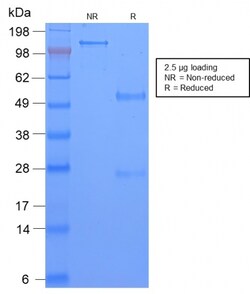
Biotium TAG-72 / CA72.4 (Tumor-Associated Glycoprotein)(CA72/2869R), Biotin conjugate, 0.1mg/mL
Recognizes an oncofetal antigen of 220 kDa, identified as a tumor-associated glycoprotein (TAG-72) with properties of a mucin. This MAb defines the mucin-carried sialylated-Tn epitope. TAG-72 is usually expressed by adenocarcinomas, but is negative in mesotheliomas. Studies have reported that this antibody has 80% sensitivity and 93% specificity for pulmonary adenocarcinoma. Therefore, TAG-72 is a useful marker to distinguish between mesothelioma and adenocarcinoma. However, false positive reactions can occur so results must be interpreted with the utmost caution. This antibody may be useful in the differentiation of non-small cell carcinomas from small cell carcinomas of the lung. The combined use of anti-TAG-72 and anti-GCDFP-15 is valuable in the diagnosis of apocrine carcinoma. Primary antibodies are available purified, or with a selection of fluorescent CF Dyes and other labels. CF Dyes offer exceptional brightness and photostability. Note: Conjugates of blue fluoresc
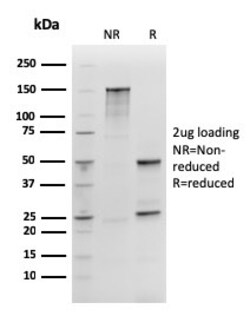
Biotium SOX2 (Embryonic Stem Cell Marker)(rSOX2/1792), CF488A conjugate, 0.1mg/mL
SOX2 is required for stem cell maintenance in the central nervous system, and it also regulates gene expression in the stomach. SOX2 is necessary for regulating multiple transcription factors that affect Oct 3/4 expression. An essential function of SOX2 is to stabilize embryonic stem cells in a pluripotent state by maintaining the requisite level of Oct 3/4 expression. Reportedly, SOX2 is associated with aggressive phenotypes of breast, head and neck, gastric, colorectal, bladder, and small cell lung cancers. However, SOX2 is expressed in a high percentage of lung squamous cell carcinomas and has been shown to be an independent favorable prognostic marker. Primary antibodies are available purified, or with a selection of fluorescent CF Dyes and other labels. CF Dyes offer exceptional brightness and photostability. Note: Conjugates of blue fluorescent dyes like CF405S and CF405M are not recommended for detecting low abundance targets, because blue dyes have lower fluoresc
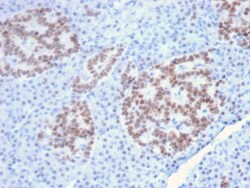
Biotium HNF1A (Pancreatic Tumor Suppressor)(HNF1A/2087), CF740 conjugate, 0.1mg/mL
HNF1A belongs to the homeobox protein family and is an essential transcription factor for many hepatic genes involved in detoxification, homeostasis and metabolisms of glucose, lipid, steroid and amino acid. In addition, HNF1A is an important component of the transcriptional networks governing embryonic pancreas development and differentiation. as well as maintaining the growth and function of islet cells in adult. HNF1A (Hepatocyte nuclear factor 1 alpha) is a transcription factor that is known to regulate pancreatic differentiation and maintain homeostasis of endocrine pancreas. Recently, genome-wide association studies have implicated HNF1Aas a susceptibility gene for pancreatic cancer. Primary antibodies are available purified, or with a selection of fluorescent CF Dyes and other labels. CF Dyes offer exceptional brightness and photostability. Note: Conjugates of blue fluorescent dyes like CF405S and CF405M are not recommended for detecting low abundance targets, because
Biotium MAML3 (Mastermind Like Transcriptional Coactivator 3) (MAML3/1303), CF647 conjugate, 0.1mg/mL
MAML3 (mastermind-like protein 3) is a nuclear speckle protein that acts as a transcriptional coactivator for Notch receptors. The Notch signaling pathway influences cell fate by regulating the ability of precursor cells to properly respond to developmental signals. MAML3 is a member of the mastermind-like family of proteins that are human homologs of the Drosophila melanogaster mastermind protein. Through its N-terminal region, MAML3 interacts with the ankyrin repeats of the Notch proteins Notch 1, Notch 2, Notch 3 and Notch 4.This interaction leads to formation of a DNA-binding complex with the Notch proteins and RBP-J, a complex that can then induce HES1 gene expression. While the N-terminal domain of MAML3 is essential for proper Notch binding, the C-terminal domain of MAML3 is essential for transcriptional activation. Due to its involvement in cell signaling and transcriptional activation, upregulation of MAML3 is thought to be involved in oncogenesis.Primary antibodies
Biotium Thrombomodulin / CD141 (Endothelial Cell Marker) (THBD/1782), CF594 conjugate, 0.1mg/mL
This antibody recognizes a protein of 75 kDa, identified as Thrombomodulin. Thrombomodulin is a transmembrane glycoprotein with natural anticoagulant properties. It is normally expressed by a restricted number of cells, such as endothelial and mesothelial cells. In addition, synovial lining and syncytio-trophoblasts of placenta also express thrombomodulin. This protein is present in almost all of benign vascular tumors and majority of malignant vascular tumors (Kaposi's sarcoma, angiosarcoma, and epithelioid hemangioendothelioma). Hence, anti-thrombomodulin serves as a sensitive marker for lymphatic endothelial cells and their tumors. Recently, thrombomodulin antibody has been used for mesothelial cells and malignant mesotheliomas.Primary antibodies are available purified, or with a selection of fluorescent CF Dyes and other labels. CF Dyes offer exceptional brightness and photostability. Note: Conjugates of blue fluorescent dyes like CF405S and CF405M are not recommended for
Biotium Chromogranin A(CHGA/777), CF740 conjugate, 0.1mg/mL
Chromogranin A is present in neuroendocrine cells throughout the body, including the neuroendocrine cells of the large and small intestine, adrenal medulla and pancreatic islets. It is an excellent marker for carcinoid tumors, pheochromocytomas, paragangliomas, and other neuroendocrine tumors. Co-expression of chromogranin A and neuron specific enolase (NSE) is common in neuroendocrine neoplasms. Reportedly, co-expression of certain keratins and chromogranin indicates neuroendocrine lineage. The presence of strong anti-chromogranin staining and absence of anti-keratin staining should raise the possibility of paraganglioma. The co-expression of chromogranin and NSE is typical of neuroendocrine neoplasms. Most pituitary adenomas and prolactinomas readily express chromogranin.Primary antibodies are available purified, or with a selection of fluorescent CF Dyes and other labels. CF Dyes offer exceptional brightness and photostability. Note: Conjugates of blue fluorescent dyes
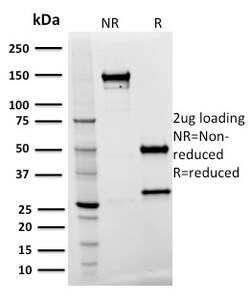
Biotium Spastin(Sp 3G11-1), CF740 conjugate, 0.1mg/mL
The AAA protein family members share an ATPase domain and have roles in various cellular processes including intracellular motility, membrane trafficking, proteolysis, protein folding and organelle biogenesis. Spastin, a member of the AAA protein family, is a 616 amino acid protein and is involved in the function or assembly of nuclear protein complexes. The Spastin protein is expressed ubiquitously and localizes to the nucleus and the cytoplasm, where it may also be involved in microtubule dynamics. Mutations in the Spastin gene (SPAST, SPG4) cause the most common form of spastic paraplegia 4, an autosomal dominant form of hereditary spastic paraplegia (HSP). HSPs comprise a group of inherited neurological disorders characterized by spastic lower extremity weakness due to a length-dependent, retrograde axonopathy of corticospinal motor neurons. SPAST-specific mutations account for approximately 40% of all autosomal dominant HSPs. Primary antibodies are available purified, or
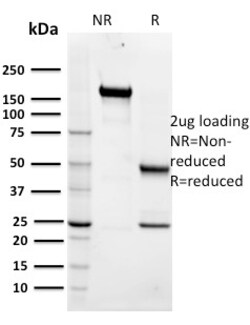
Biotium Maltose Binding Protein / MBP-probe(R29.6), CF568 conjugate, 0.1mg/mL
Plasmid vectors for the expression of coding regions of eukaryotic genes in bacterial, insect and mammalian hosts are in common usage; such expression vectors frequently encode hybrid fusion proteins consisting in part of prokaryotic and in part, eukaryotic specified proteins. One such system utilizes maltose binding protein (MBP), the 370 amino acid product of the E. coli mal E gene. Plasmid vectors have been constructed utilizing the MBP domain that allow the synthesis of high levels of MBP-fusion proteins that can be Purified in a one step procedure by affinity chromatography crosslinked amylose resin. Once bound to amylose, the MBP protein can then be separated from the target protein by cleavage by coagulation factor Xa at a specific four residue site. Alternatively, the intact fusion protein can be specifically eluted from the resin by the addition of excess free maltose. Subsequent to elution, MBP fusion protein can be visualized either by western blot analysis or immu